
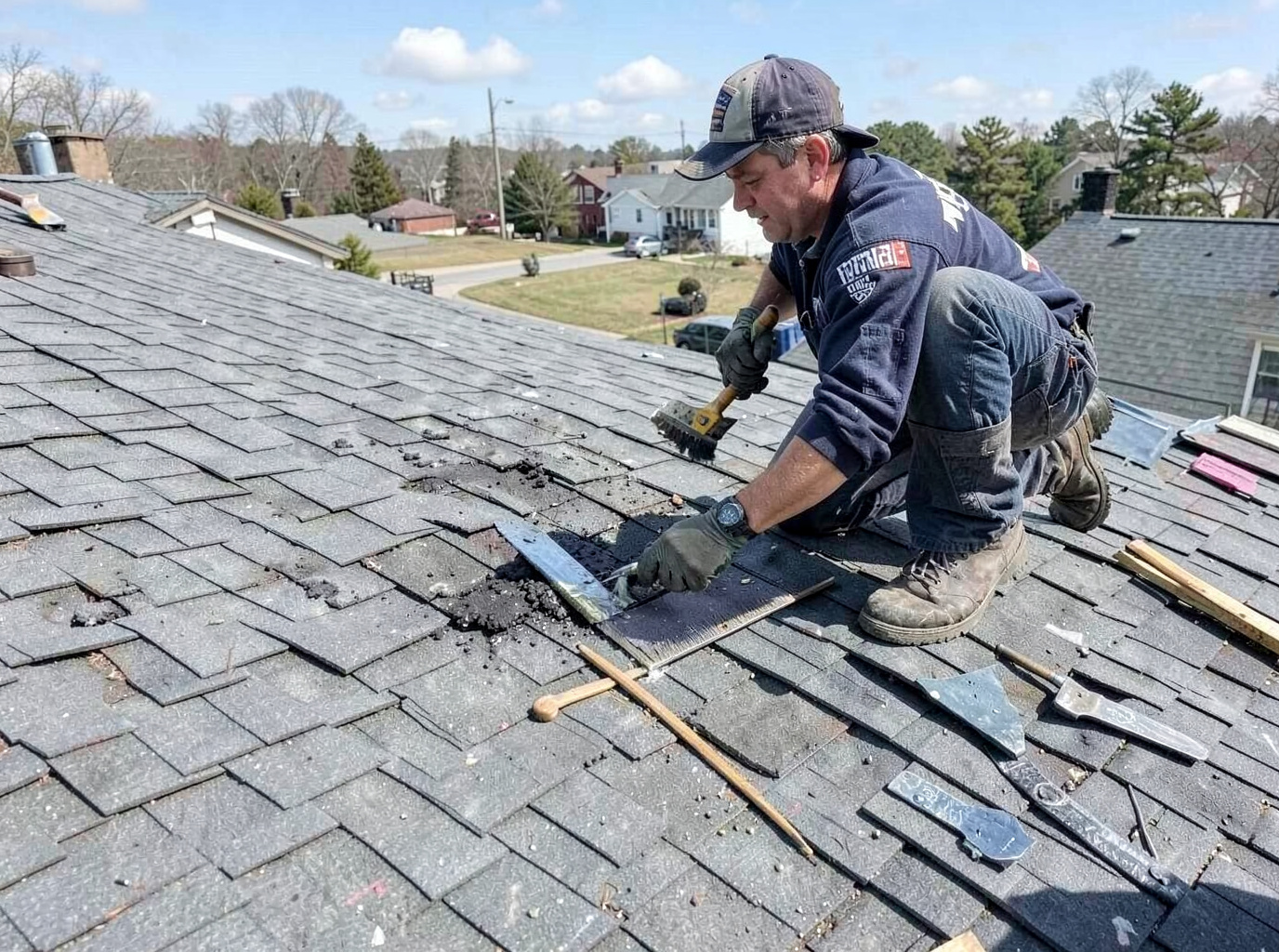
Hail in Conway's humid subtropical climate often strikes during spring and early summer, denting asphalt shingles on 1970s-1990s homes common in Cadron and West Conway. Crews inspect for granule loss, cracked seals around vents, and soft spots under the decking that develop when water reaches plywood after repeated impacts. Repairs focus on matching existing shingle profiles rather than full replacement unless the deck shows widespread rot from the area's mild but wet winters.
Near Lake Conway, wind-driven hail frequently damages north-facing slopes first, while homes close to Hendrix College campus see more tree-limb interference that masks smaller hail hits. Technicians check flashing at chimneys and skylights because Conway's hot summers expand metal components and widen any existing punctures. Insurance documentation includes photos of each impact zone and notes on original shingle manufacturer to satisfy Faulkner County permitting requirements.
Edge cases include older homes in Downtown Conway where multiple layers of shingles make impact assessment harder and increase tear-off costs. Metal roofs on outbuildings near Toad Suck Park need dent filling or panel swaps rather than coating alone, since standing water from summer humidity accelerates corrosion at impact sites. All work stays within Mon–Fri 8am–6pm and Sat 9am–2pm schedules from the Conway base.
Technician insight
In Conway the thing that catches most people out with Hail Damage Roof Repair is older homes in Cadron that still have two or three layers of shingles; one missed impact under the top layer lets water sit through our mild winters and rot the deck before the next summer storm hits.
Cadron Hail Repair
Homeowner in Cadron noticed granule piles in the gutters after a May storm. Inspection found 18 impact zones on the north slope plus soft plywood under two vents. Crew removed damaged shingles, replaced three sheets of decking, and installed matching shingles. Roof passed final inspection with no active leaks during the following humid summer.
Hail Damage Roof Repair Services We Offer
✓Hail Damage Inspection
Detailed roof survey documenting impact locations, granule loss, and deck condition for homes in Cadron and West Conway.
✓Asphalt Shingle Hail Repair
Targeted replacement of damaged shingles on 1980s-2000s stock common near Conway City Hall without full roof replacement.
✓Metal Panel Hail Restoration
Dent repair, panel swaps, and seam resealing for metal roofs on outbuildings around Lake Conway.
✓Flashing and Vent Hail Fix
Replacement of hail-damaged pipe boots, step flashing, and ridge vents to stop leaks in humid Conway summers.
✓Gutter Hail Damage Repair
Straightening and section replacement of dented gutters on properties near Toad Suck Park after spring storms.
Hail Damage Roof Repair Cost in Conway, AR
| Service | Typical Range | What Affects It |
|---|---|---|
| Hail Damage Inspection | Free | Includes photos and written report for insurance |
| Single Slope Shingle Repair | $450–$900 | Depends on square footage and existing layers |
| Full Roof Hail Section Replacement | $2,800–$6,500 | Varies with deck repairs and access in West Conway |
| Metal Panel Swap | $350–$750 per panel | Size and color match affect final cost |
Ranges are typical for Conway, AR and confirmed with an exact written quote before any work starts.
How it works
- 1
On-Site Assessment
Walk the roof slopes in Downtown Conway or Cadron, mark every visible hail hit, and photograph granule loss and soft deck areas.
- 2
Insurance Documentation
Prepare labeled photos and material notes for Faulkner County claims, noting shingle age and existing layers.
- 3
Targeted Removal
Lift only damaged sections, inspect decking for rot from prior rain, and replace plywood where needed.
- 4
Matching Replacement
Install new shingles or panels that match existing color and profile, then reseal all penetrations.
- 5
Final Walk-Through
Review every repaired slope with the homeowner and confirm drainage before leaving the site.
Pricing
Upfront written quotes after inspection; price varies by roof size, number of layers, and extent of deck damage.